Blog ESM
TRAIN DRIVER ERROR AND BEACONS
![accidenteimpacto_270x250[1]](../assets/images/blog/train-driver-error-and-beacons/imagen-01.webp?v=5f1f21dd)
It seems every day more forcefully and supporters it was “train driver error” the main cause of the accident of Santiago. And if so, what the causes of that error, and the responsibilities and remedies.
Suddenly we are all experts in beacons, we’re not really, make us the “mass media” and technicians in 24 hours. Now we know a lot of ERTMS and ASFA, differences and uses of these technological devices, but it seems that we know that have not failed, they are not the main cause of this accident, it was a driver error.
Well, if these systems exist and have not failed, why ask everybody for more medicine future all the same, or is an incongruity or marking a path we may not is what we want.
Accidents do have causes: technical and human, of the two, which is the most common. If you have been techniques, discover the evidence and propose effective measures techniques, more beacons for example. But what if they were human?, ! as more “beacons” also.
A high-risk system is rail, highly technical, requires international standards, rigorous, that regulates and sets standards and safety requirements in this case is called RAMS, sorry for the new term and is not a beacon. The RAMS establish some requirements for these systems “technical feasibility” technical failures have not been to produce and has to prevent the likelihood of occurrence, with beacons for example., And “human reliability” human errors be produced and have to prevent the likelihood of occurrence, how “human beacons”?.
In the present case, it is shown that human error was the main cause, we use the international legal framework governing it to look for evidence of failure in the individual and interaction factors to human behavior: the organization, infrastructure and the machine itself. In this interaction we will find the true causes, the system real pathogens that have led to this tragedy; we also find weaknesses RAMS fulfillments in human reliability assurance.
Forgive the analogy, but highly technical systems such as Formula 1 teams are highly concerned about the mechanical failures, but more of “pilot error”, use technology, and probabilistic models such computed analysis to calculate the probability of human failure, and thus to determine barriers that reduce this probability. Also made in nuclear, aviation or space flight. Is it done as well in rail systems?, No, here we propose more “beacons” …
If you have a headache, paracetamol, but if you have an infection, antibiotics. Beacons must not advise the one and the other. The HRA human reliability models (human reliability assessment) have long existed, just have to get out of the universities and research centers and applied in high-risk industry, that can be the “human beacons”.
The monitoring and automatic braking ERTMS and ASFA also fail, consult Google unbelievers, all automated systems can fail and lead to accidents, we call it the “ironies of automation”, our last chance is always the driver, the pilot and captain, so we demand to invest in models of “human reliability” should be a possible solution, blame solely responsible the train driver, it is a big mistake, without any utility for rail safety.
My job is in human reliability for many years, and I write these lines with the head, so I have heart broken by accident. Baltasar Gil Egea
Continuar leyendo
Artículos relacionados
Factores Humanos
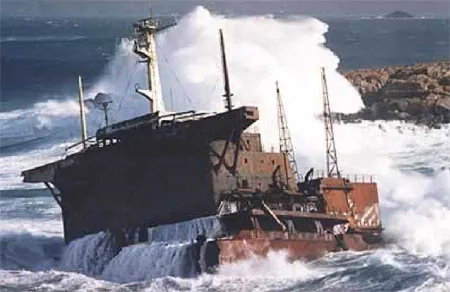
Los errores humanos no son causas, son consecuencias
Es muy interesante este Estudio que subraya el aumento de los accidentes marítimos en el mundo, es también preocupante que el inmenso avance tecnológico…
Leer artículo
Factores Humanos
Más que amigos!
Desde hace años venimos trabajando con el método CRM (crew resource management) y con el BRM (bridge resource management) en el sector aéreo y marítimo…
Leer artículo
accidente de tren
20 años del Ladbroke Grove
Se cumplen 20 años del accidente de Ladbroke Grove (Paddinton 1999) donde una colisión frontal entre dos trenes de pasajeros, uno de los cuales era de…
Leer artículo